

Why Series A Founders Should Stop Ignoring Pantheon Street Cloth Market

A hundred-year-old fabric bazaar in Chennai can source your next hoodie drop faster and cheaper than any branded merch vendor your ops lead found on Google.
The Merch Problem Nobody Budgets For
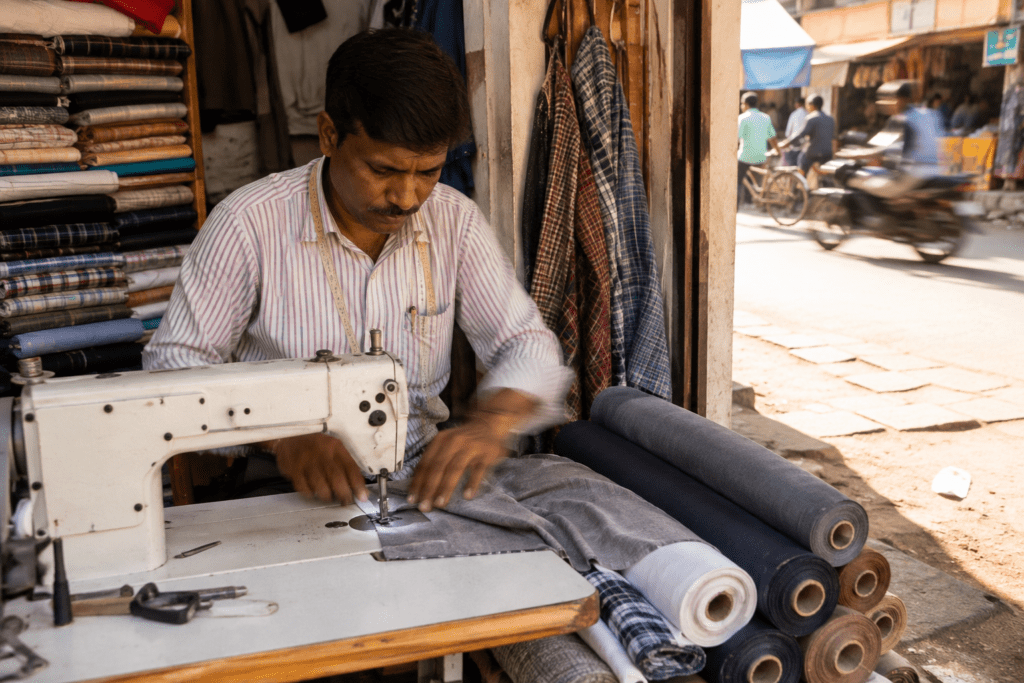
Series A founders plan for payroll, cloud spend, and GTM headcount. They rarely plan for the moment a hundred new hires need onboarding kits, a hackathon needs branded T-shirts by Friday, or a field-ops team needs uniforms that survive daily wear. Corporate merch vendors solve this with long lead times, high minimum order quantities, and margins built for enterprise budgets, not lean startups burning runway.
Pantheon Street Cloth Market solves a different equation. It is a working fabric and garment bazaar, not a design studio, so it strips out the layers of markup that come from agencies managing your order on your behalf. Buyers walk in, negotiate with the person who actually stocks the fabric, and walk out with material or finished pieces the same day. For a founder measuring every rupee against burn rate, that difference matters more than a polished pitch deck from a merch agency ever will.
Speed Beats Polish When You’re Moving Fast
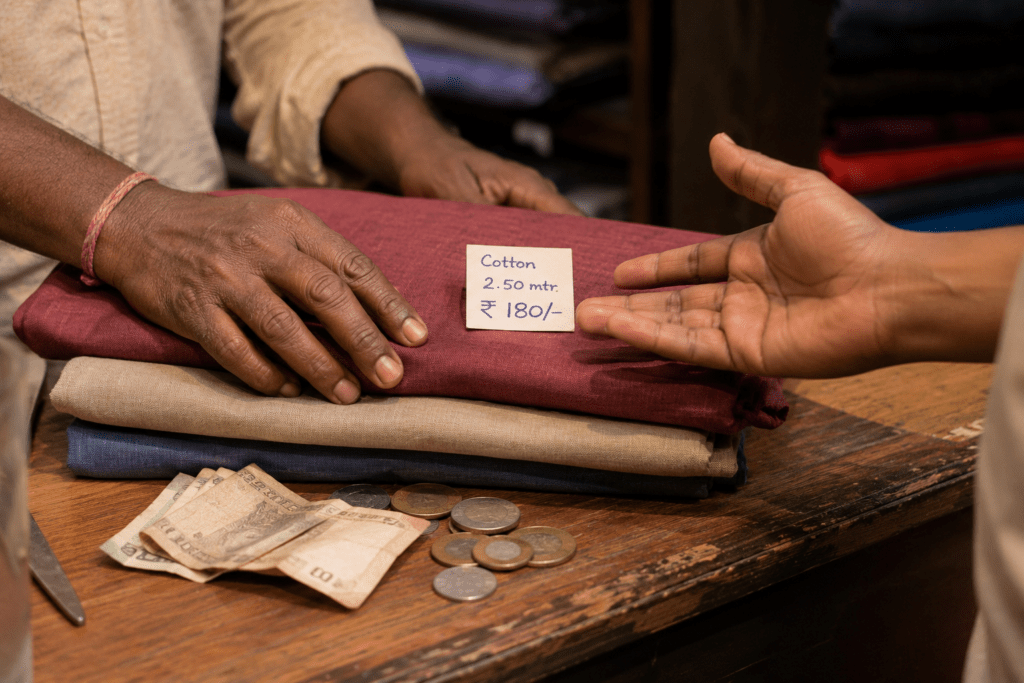
Startups don’t fail because their branded hoodies weren’t stitched by a premium label. They fail because they run out of time or cash before the next milestone. Pantheon Street Cloth Market operates as an open, no-appointment high street: no formal gates, no procurement portal, no three-week quote cycle. Shops line the lane and sell directly, which means a founder or an ops hire can source cotton, printed material, or finished garments in a single visit rather than a drawn-out vendor negotiation.
Tailoring and alteration shops sit inside the same market, so a batch of team polos can go from raw fabric to finished, sized garments without a separate manufacturing step. That collapsed timeline is the actual argument for Pantheon Street Cloth Market: it turns apparel sourcing from a multi-week workflow into a single trip, which is exactly the kind of speed a resource-constrained team needs when the roadmap won’t wait.
The ROI Math Actually Holds Up

Founders who dismiss a street market as “not scalable” are comparing it to the wrong use case. Nobody is proposing Pantheon Street Cloth Market as a replacement for a factory contract once a company needs fifty thousand units a quarter. The comparison that matters is against the boutique merch vendor charging a design fee, a setup fee, and a per-unit markup for an order of two hundred hoodies.
Cotton at the market has historically traded in the range of ₹100–150 per meter, sold directly by the vendor stocking it, with bargaining as a normal and expected part of the transaction. That pricing structure, combined with on-site tailoring, gives early-stage teams a real cost advantage on small-to-medium batches: onboarding kits, conference booth staff shirts, or a limited run of investor-update swag. A founder does not need enterprise-scale sourcing to justify the trip; a founder needs to stop overpaying for the same cotton polo a vendor buys wholesale and re-sells at a startup-unfriendly markup. Pantheon Street Cloth Market removes that middle layer entirely.
What a Founder Actually Gets on the Ground
Walk the lane and the market’s reputation becomes obvious rather than theoretical. Stalls carry cotton, silk, georgette, and chiffon alongside ready-made western wear, and the range extends into traditional garments for teams that need culturally appropriate options for regional offices or events. Multiple tailoring shops operate inside the market, which means a founder can source fabric and get it cut and sewn without leaving the block.
The tradeoff is real and worth naming plainly: parking is difficult, especially on weekend evenings, and the lane has no food or water vendors nearby, so a sourcing trip needs a little planning. Weekday mornings run less crowded than evenings, which matters for a founder who wants to move through negotiations quickly rather than compete for a vendor’s attention in a packed lane. None of this requires an account manager or a sales call
. It requires showing up, negotiating directly, and leaving with product — the exact operating model a lean startup team already understands from every other part of the business.
Pantheon Street Cloth Market will not build a founder’s brand identity system, and it was never meant to. What it offers is a direct line to fabric and finished garments at a price and speed that formal merch vendors cannot match for small, urgent, budget-sensitive orders — which is precisely the kind of order a Series A team places most often.
Pantheon Street’s official market pagehttps://pantheonstreetclothmarket.com/about-us/
getting to Pantheon Streethttps://corebelong.com/pantheon-street-chennai/
shopper reviews of the markethttps://wanderlog.com/place/details/71618/pantheon-street-cloth-market
the market’s business listinghttps://www.justdial.com/Chennai/Pantheon-Street-Cloth-Market-Egmore/044PXX44-XX44-250305203026-L8J4_BZDET
written by ncclothinghttps://ncclothing.com/