
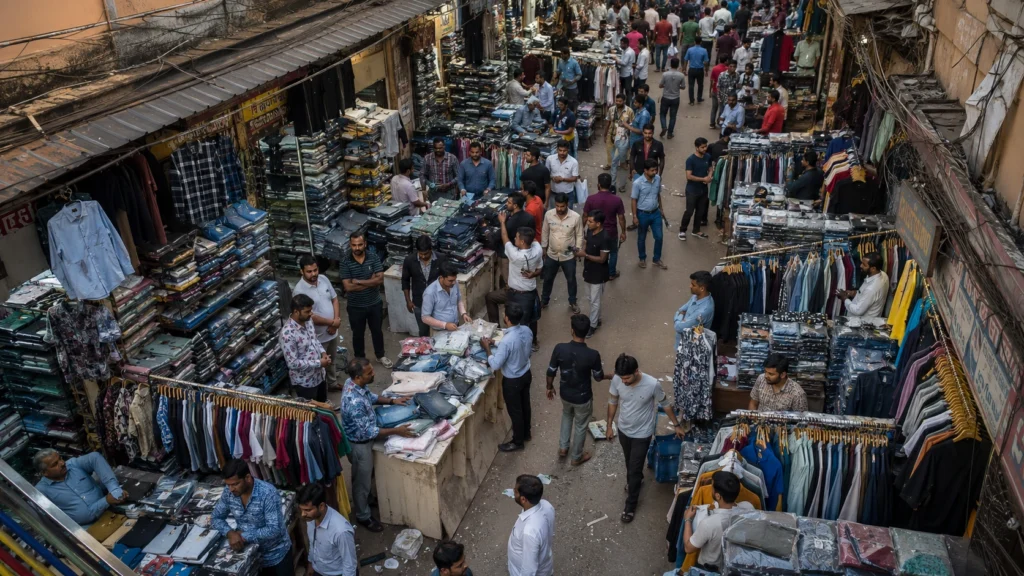
A founder who sources apparel through three overseas agents can replace all three with one trip to Gandhi Nagar and cut lead time from six weeks to six days.
That claim sounds like a pitch deck slide, but it holds up against how Delhi’s garment trade actually runs. If you’re building a D2C apparel brand, a resale platform, or a private-label line and you’re still treating sourcing as a background task your ops hire handles between Slack messages, you’re leaving margin on the table. The branded clothes wholesale market in Delhi isn’t a nostalgia trip for bargain hunters — it’s a supply chain node that a lot of founders underrate because it doesn’t come with a sales deck or a warm intro.
The Market Structure You’re Actually Buying Into
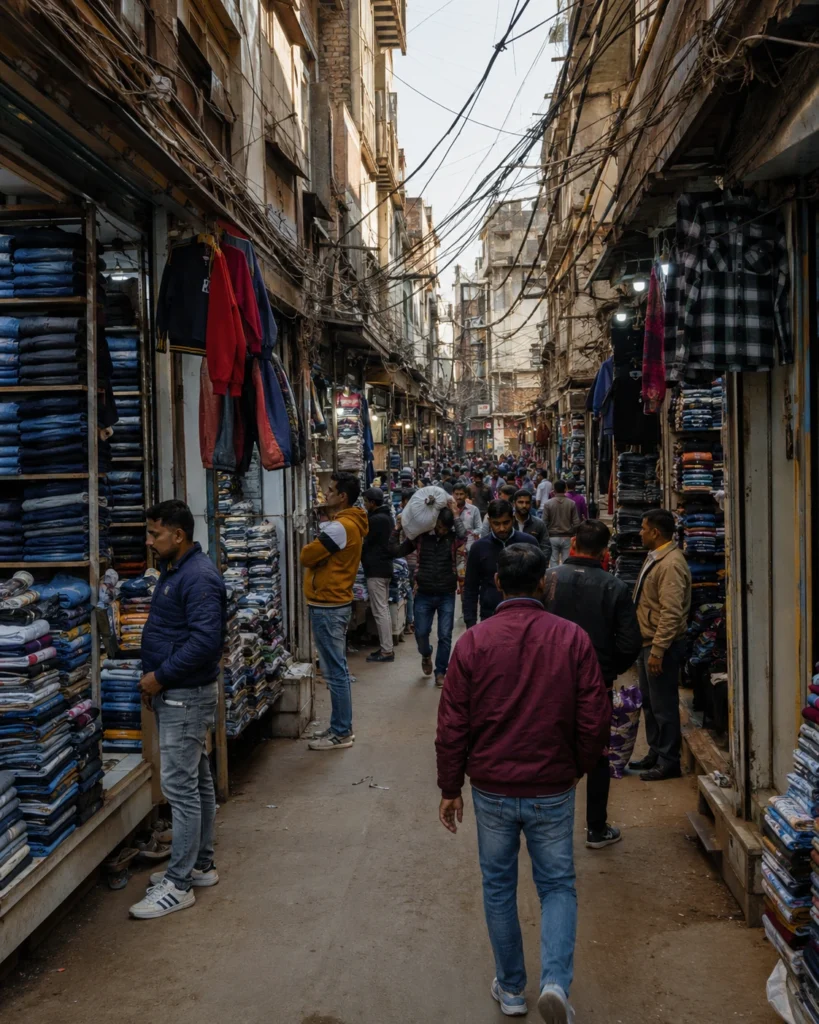
Gandhi Nagar in East Delhi runs as one of Asia’s largest ready-made garment wholesale hubs, with thousands of shops packed into a dense grid of lanes near Shahdara. It isn’t a single building or a curated mall — it’s closer to a distributed marketplace where individual units specialize by product line: denim, hosiery, children’s wear, ladies’ suits, formal shirts. Tank Road, inside Karol Bagh, runs a parallel but smaller operation focused heavily on jeans and shirts, and it draws buyers who want a tighter, faster walkthrough than Gandhi Nagar’s scale allows.
This structure matters for how you plan a sourcing trip. You don’t “visit the branded clothes wholesale market in Delhi” the way you’d visit a single vendor’s showroom. You map a route across specific lanes for specific product categories, because a single unit rarely stocks a full assortment. Founders who treat this like a single-stop errand waste a day. Founders who arrive with a category-by-category shortlist convert that same day into signed orders.
The supply behind these racks comes from factory overruns, export surplus, last-season liquidation, and minor-defect stock — the same production runs that feed export orders for global retailers, redirected into the domestic wholesale channel once the export buyer’s quota closes. That’s why price points can undercut formal retail so aggressively: you’re not paying for a second round of manufacturing, you’re paying for redistribution of stock that already exists.
The ROI Math Founders Skip
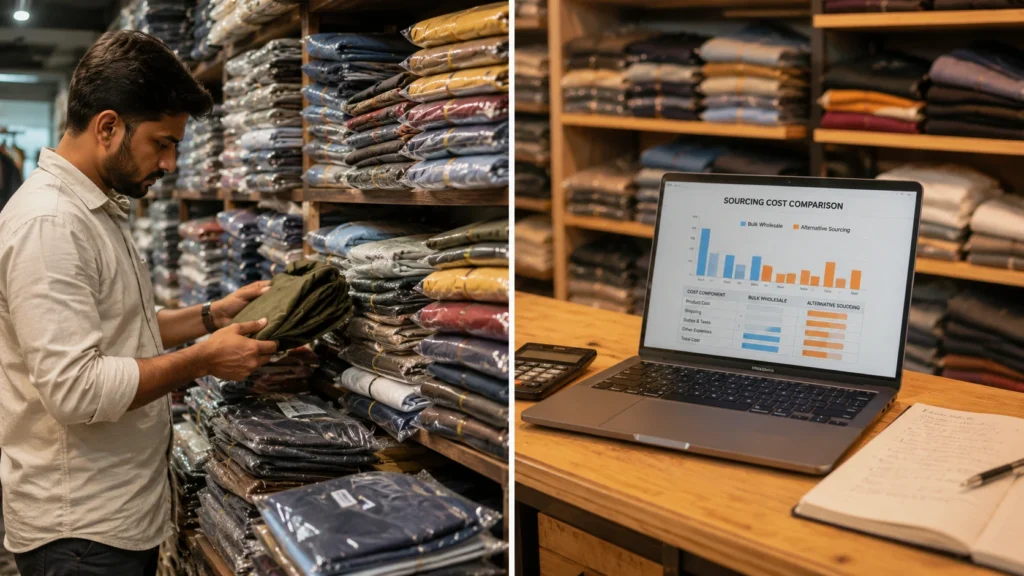
Run the comparison your finance lead would want to see. A founder sourcing through an overseas trading company typically eats a 20–35% markup for agent fees, minimum order quantities that lock up working capital, and a shipping and customs cycle that stretches four to eight weeks before stock lands. Sourcing directly from a wholesale market in Delhi collapses most of that.
You negotiate at the unit, in person, against visible stock — no blind PO based on a photo and a promise. Minimum quantities at markets like Gandhi Nagar run far lower than an overseas factory’s MOQ, which means you can test three SKUs with small batches before committing capital to a full production run. And because the goods are already manufactured and sitting in-market, your time-to-shelf is measured in days, not shipping cycles.
The trade-off you have to underwrite honestly: authenticity risk. Surplus and grey-market redistribution means some stock is genuine overrun, some carries minor factory defects, and some is a convincing copy. A founder who skips due diligence here isn’t getting a bargain — they’re importing a returns problem. Build in a verification step (batch checks, a trusted sourcing partner who’s worked the market for years, spot-testing labels against known factory codes) before you scale a single supplier relationship past a pilot order.
Matching the Market to Your Product Line, Not the Other Way Around
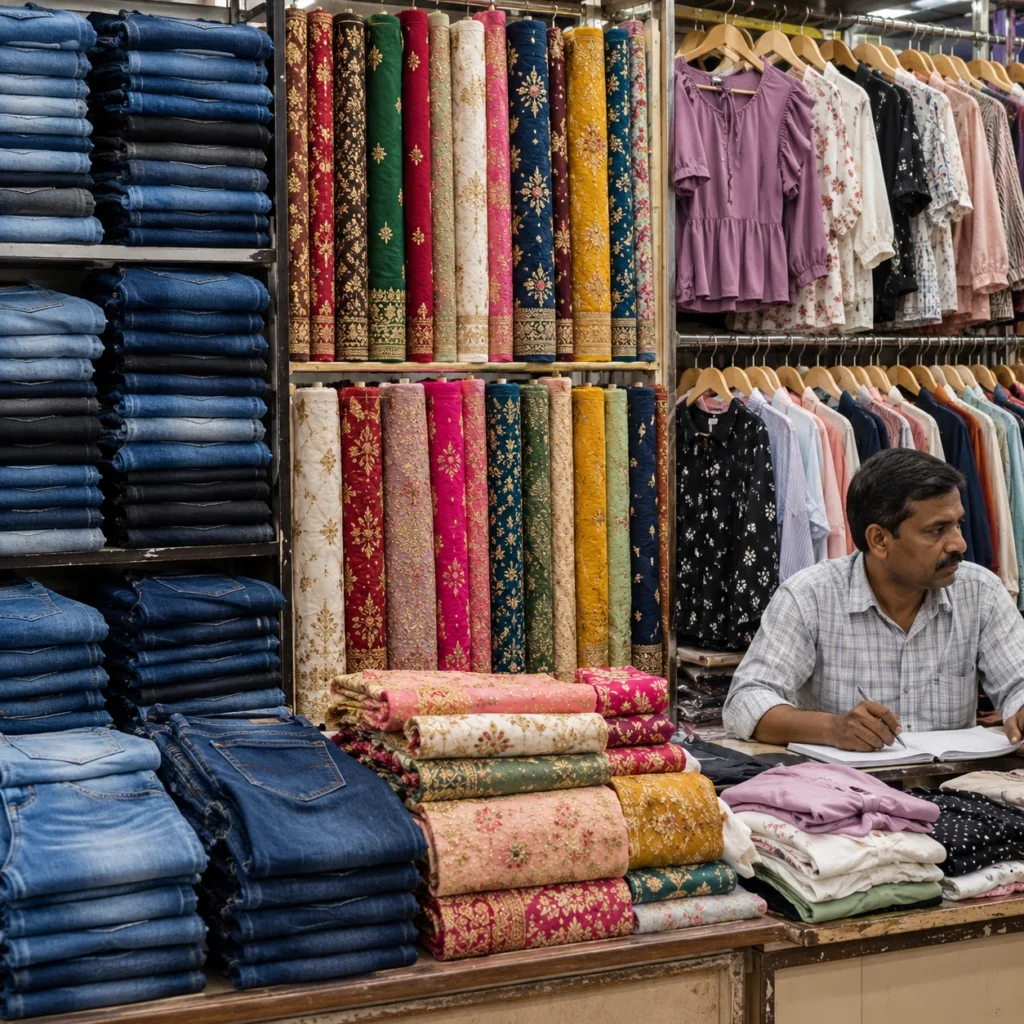
Delhi’s wholesale geography splits by category, and picking the wrong market for your product wastes the trip. If you’re building a Western-wear or streetwear line, Sarojini Nagar and Central Market give you stylish, trend-forward bulk stock, and Sarojini Nagar’s Pink Line metro station makes it the easiest of the group to reach without a car. If your line runs ethnic wear, bridal, or festive collections, Karol Bagh and Chandni Chowk’s Kinari Bazaar carry the artisanal and designer-fabric depth that Sarojini Nagar doesn’t stock. If you need plain fabric, blends, or printed material as inputs rather than finished garments, Shanti Mohalla and the fabric side of Gandhi Nagar are the right stop, not the finished-garment lanes.
This isn’t a minor detail — it’s the difference between a founder who shows up once, gets a mediocre haul, and writes off the whole channel, versus one who treats it as a set of specialized supplier networks and builds repeat relationships in the two or three lanes that actually match their catalog.
The Operational Friction Nobody Puts in the Pitch
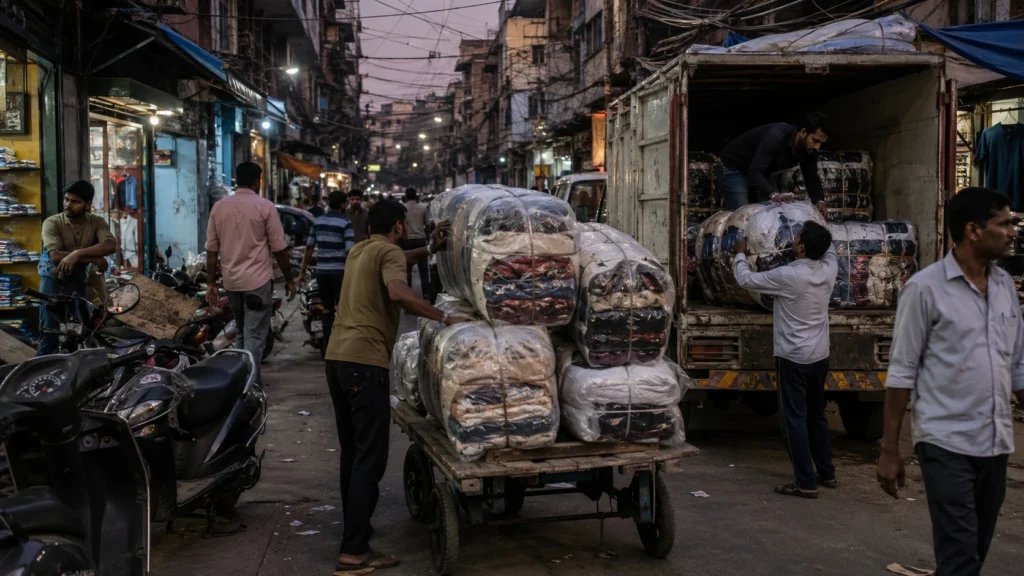
None of this comes free of execution risk, and pretending otherwise sets your ops team up to fail. Gandhi Nagar and Chandni Chowk both run through narrow, congested lanes that slow inspection, packaging, and loading — budget real time for this, not the time your Google Maps estimate suggests. Interstate movement of bulk consignments out of Delhi introduces its own coordination overhead: pickup delays and inconsistent last-mile handoffs can quietly erase the speed advantage you sourced the goods for in the first place.
The founders who actually capture the ROI here treat logistics as part of the sourcing decision, not an afterthought bolted on after the purchase. That means locking in a reliable pickup and interstate freight partner before the first bulk order ships, not after the first missed deadline. Sourcing fast from the branded clothes wholesale market in Delhi only pays off if your dispatch chain moves at the same speed as your buying trip did.
Delhi’s wholesale garment markets reward founders who show up with a plan and a verification process, and they punish founders who treat them as a shortcut. Get the category-market match right, underwrite the authenticity risk honestly, and lock down logistics before you scale, and this channel outperforms almost anything your current sourcing stack can offer.
Table of Contents
Branded clothes wholesale market in Delhi/branded-clothes-wholesale-market-in-delhi